Quick Answer

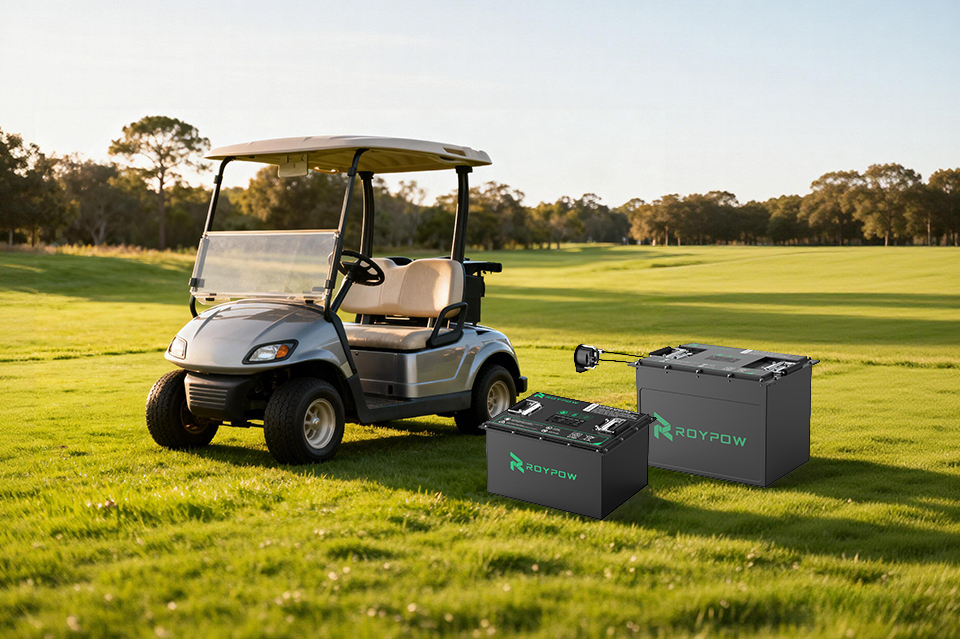
The average EZGO golf cart battery replacement cost in 2026 ranges from about US$900 to US$1,800 for lead-acid battery sets and from about US$1,600 to US$4,200 for lithium battery systems, depending on voltage, capacity, charger needs, installation method, regional pricing, and whether the cart is an EZGO TXT, RXV, or ELiTE model.
For most golf cart owners, resorts, golf courses, fleet operators, gated communities, universities, warehouses, and tourism businesses across the global world market, the lowest upfront option is still flooded lead-acid. However, lithium iron phosphate, especially LiFePO4, is increasingly the preferred long-term replacement because it reduces maintenance, improves runtime, charges faster, lasts longer, and often delivers a lower 10-year total cost of ownership.
If you want a simple budgeting rule, use the following:
- 36V EZGO TXT lead-acid replacement: usually US$900–US$1,500 installed.
- 48V EZGO TXT or RXV lead-acid replacement: usually US$1,100–US$1,900 installed.
- 36V lithium conversion: commonly US$1,600–US$2,800 depending on capacity and charger.
- 48V lithium conversion: commonly US$1,900–US$3,500 depending on amperage-hour rating, BMS, charger, and display kit.
- 72V lithium system: commonly US$2,800–US$4,800 for higher-performance or commercial applications.
Prices vary widely between North America, Europe, the Middle East, Africa, Southeast Asia, Australia, Latin America, and island markets. Freight, import duties, dealer labor rates, recycling fees, and local battery availability can affect the final invoice as much as the battery chemistry itself. A buyer in Florida, Dubai, Singapore, Rotterdam, Sydney, São Paulo, Cape Town, or Tokyo may see different landed costs even when comparing similar EZGO battery specifications.
For owners planning to keep a cart for more than three to five years, lithium often becomes the better economic choice. For short-term ownership or very light seasonal use, lead-acid may still make sense if the owner is comfortable with watering, cleaning terminals, equalizing charges, and accepting shorter cycle life.
Average Cost to Replace EZGO Batteries by Model in 2026

EZGO battery replacement prices depend first on the cart model and voltage system. Older EZGO TXT carts are often 36V or 48V. EZGO RXV carts are commonly 48V. EZGO ELiTE models are factory-built around lithium technology, so their replacement cost profile is different from a traditional lead-acid conversion. The table below provides practical 2026 budgeting ranges for global world buyers. These are typical market estimates, not fixed quotes, because local taxes, labor, and logistics vary.
| EZGO Model | Common Voltage | Lead-Acid Replacement Range | Lithium Replacement Range | Typical Buyer Profile | Key Cost Driver |
|---|---|---|---|---|---|
| EZGO TXT 36V | 36V | US$900–US$1,500 | US$1,600–US$2,800 | Private owners, communities, small resorts | Six 6V batteries versus one or more lithium modules |
| EZGO TXT 48V | 48V | US$1,100–US$1,900 | US$1,900–US$3,500 | Golf courses, rentals, campus mobility | Capacity, charger compatibility, cable condition |
| EZGO RXV 48V | 48V | US$1,200–US$2,000 | US$2,000–US$3,700 | Higher-use fleets and daily operators | Controller requirements and installation labor |
| EZGO ELiTE | 48V lithium platform | Not applicable | US$2,500–US$4,500 | Factory lithium cart owners | OEM-style compatibility and diagnostics |
| Custom lifted TXT/RXV | 48V or 72V | US$1,400–US$2,300 | US$2,500–US$4,800 | Street-legal, utility, hunting, hospitality | Higher load, tires, accessories, current draw |
| Commercial shuttle build | 48V or 72V | US$1,600–US$2,600 | US$3,000–US$5,500 | Hotels, airports, ports, logistics parks | Runtime requirement and safety certification |
The table shows why a single answer to “how much does it cost to replace EZGO batteries?” is not enough. A lightly used 36V TXT in a retirement community in Arizona or Queensland has a different requirement from a resort shuttle running all day in Bali, Cancún, Phuket, or the Caribbean. A golf course near London, Munich, or Johannesburg may also place more value on fast charging and maintenance reduction because labor costs are high and fleet uptime matters.
When comparing quotes, always ask what is included. A low advertised battery price may exclude cables, hold-downs, charger upgrades, delivery, recycling, programming, or installation. A higher quote may include a complete drop-in system, a compatible Golf Cart Battery Charger, battery monitoring, technical support, and warranty assistance. In real-world purchasing, the included support can be just as important as the battery pack price.
Lead-Acid vs Lithium: Upfront Cost Comparison

Lead-acid batteries have powered golf carts for decades, and many EZGO carts were originally designed around them. They remain popular because the initial purchase price is familiar and relatively low. The main options are flooded lead-acid, AGM, and gel. Flooded lead-acid is usually cheapest but requires the most maintenance. AGM and gel cost more but reduce watering needs.
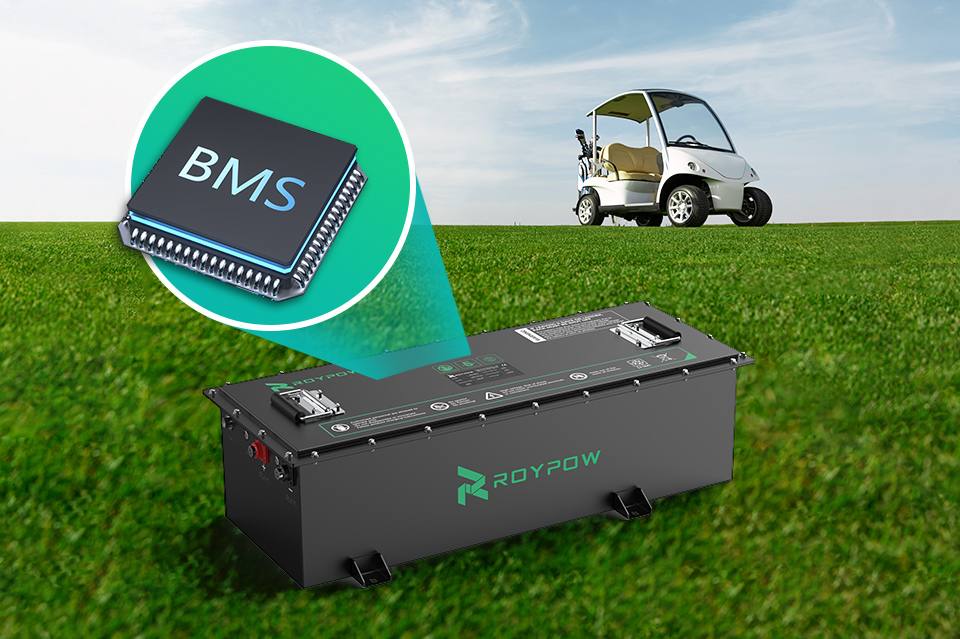
Lithium golf cart batteries, especially LiFePO4, cost more upfront but deliver major performance advantages. A lithium system is usually lighter, maintains voltage better under load, charges faster, and can provide thousands of cycles when properly designed. For EZGO owners upgrading from lead-acid, the most common choices are 36V lithium systems for older TXT carts, 48V lithium systems for TXT and RXV carts, and 72V systems for high-performance or commercial builds.
| Battery Type | Typical 2026 Upfront Cost | Expected Service Life | Maintenance Level | Charging Speed | Best For |
|---|---|---|---|---|---|
| Flooded lead-acid | US$900–US$1,800 | 3–5 years | High | Slow | Lowest upfront budget, light personal use |
| AGM lead-acid | US$1,300–US$2,300 | 4–6 years | Medium to low | Moderate | Users wanting less watering and spill risk |
| Gel lead-acid | US$1,400–US$2,500 | 4–6 years | Low | Moderate | Special environments requiring sealed batteries |
| Entry lithium LiFePO4 | US$1,600–US$2,700 | 8–10 years | Very low | Fast | Private owners upgrading older carts |
| Premium lithium LiFePO4 | US$2,500–US$4,200 | 10+ years | Very low | Fast | Fleet, resort, golf course, heavy daily use |
| High-voltage lithium | US$3,000–US$5,500 | 8–10+ years | Very low | Fast | 72V builds, utility carts, commercial shuttles |
The upfront comparison favors lead-acid. The operating comparison often favors lithium. A lead-acid pack gradually loses performance as it discharges, so the cart may feel weaker halfway through the day. Lithium maintains more consistent power, which matters for hilly courses, lifted carts, multi-passenger shuttles, and carts carrying maintenance tools. In places such as San Diego, Dubai, Singapore, Lisbon, or Gold Coast, where golf carts may be used year-round, the extra daily convenience can become a measurable economic benefit.
For a reliable lithium conversion, buyers should consider purpose-built golf cart systems rather than generic battery packs. ROYPOW offers dedicated Golf Cart Batteries designed as lithium-ion replacements for lead-acid systems, with options for common golf cart voltages and integrated battery management. This matters because a golf cart battery must handle vibration, acceleration current, charging conditions, and outdoor operating temperatures.
Hidden Costs You Should Know Before Replacing
The sticker price of an EZGO battery set is only part of the real replacement cost. Many owners are surprised by additional expenses that appear during installation. Some are small, such as terminal protectant and hold-down hardware. Others can be significant, such as charger replacement, corroded cable repair, battery tray restoration, controller troubleshooting, or freight charges for remote destinations.
The most common hidden cost is the charger. A lead-acid charger may not properly charge a lithium pack. Lithium batteries need a charging profile suited to their chemistry and BMS. Using an incompatible charger can reduce performance, trigger BMS protection, or create safety risks. In many lithium conversions, a new charger should be included in the budget from the beginning.
| Hidden Cost Item | Typical Cost Range | Applies To | Why It Matters | Can It Be Avoided? | Buying Advice |
|---|---|---|---|---|---|
| Charger replacement | US$200–US$700 | Lithium conversions and failed old chargers | Correct charging profile protects battery life | Sometimes | Confirm charger compatibility before purchase |
| Battery cables | US$50–US$250 | Older TXT and RXV carts | Corrosion increases resistance and heat | No, if cables are damaged | Inspect cables before installing new batteries |
| Battery tray repair | US$100–US$600 | Lead-acid carts with acid corrosion | Weak trays can compromise mounting safety | Sometimes | Clean and neutralize corrosion early |
| Labor and diagnostics | US$150–US$600 | Professional installation | Ensures correct wiring and fault detection | DIY for skilled owners | Use experienced golf cart technicians |
| Freight and duties | US$100–US$900+ | Remote regions and cross-border purchases | Batteries are heavy and regulated goods | Partly | Buy through local dealers when possible |
| Recycling or core fees | US$10–US$40 per battery | Lead-acid replacement | Old batteries require responsible disposal | No | Ask whether the quote includes recycling |
| State-of-charge meter | US$40–US$250 | Lithium upgrades | Lead-acid meters may read lithium incorrectly | Sometimes | Choose a system with accurate monitoring |
Hidden costs are especially important in island markets and remote regions. Buyers in Hawaii, the Bahamas, Maldives, Mauritius, Fiji, or rural mining and tourism areas may pay more for shipping than buyers near major ports such as Los Angeles, Rotterdam, Hamburg, Singapore, Busan, Jebel Ali, Santos, Durban, or Sydney. A supplier with regional inventory or dealer coverage can reduce delays and lower the risk of receiving incompatible parts.
Another hidden cost is downtime. If a fleet of 40 golf carts at a resort loses several units during peak season, the cost is not just the battery invoice. It may include guest complaints, shuttle delays, rental refunds, and staff time. This is one reason commercial operators increasingly evaluate lifetime value rather than only purchase price.
EZGO TXT vs RXV vs ELiTE: Replacement Cost Breakdown
EZGO TXT, RXV, and ELiTE carts differ in platform design, electrical architecture, user expectations, and replacement complexity. Understanding these differences helps buyers avoid overpaying or under-specifying the battery system.
The EZGO TXT is one of the most common golf cart platforms worldwide. Many older TXT carts use 36V systems with six 6V batteries, while newer or upgraded TXT carts may use 48V systems. TXT carts are popular in neighborhoods, golf courses, farms, resorts, campuses, and industrial sites because parts are widely available. A 36V TXT lead-acid replacement is usually the least expensive option. A lithium upgrade can dramatically reduce weight and improve acceleration, especially if the old lead-acid pack was weak.
For a 36V conversion, buyers can consider purpose-built 36V Golf Cart Batteries. These systems are relevant for owners who want to keep a 36V cart rather than convert the entire vehicle to 48V. The right 36V lithium solution can provide a cleaner installation than combining unrelated batteries.
The EZGO RXV is typically more modern and often uses a 48V system. RXV carts may include more sophisticated electronics and braking systems than older TXT models. Battery replacement should be done carefully, especially when converting to lithium. The technician should confirm controller compatibility, charger settings, cables, and accessories. For RXV and 48V TXT applications, dedicated 48V Golf Cart Batteries are often the most practical upgrade path.
EZGO ELiTE models are factory lithium carts. Their replacement situation is different because the cart was designed around lithium from the start. Owners may need OEM-style compatibility, diagnostic support, and careful attention to communication protocols. ELiTE replacement can be more expensive than a basic lead-acid swap but may preserve performance and resale value.
High-performance or utility EZGO builds may use 72V systems. These are common where users need stronger acceleration, higher efficiency under load, or more robust commercial duty cycles. Applications include security patrols, large resorts, airports, event venues, industrial parks, and hilly private communities. A 72V Lithium Golf Cart Battery can be suitable when the rest of the cart system is designed for that voltage and the installation is handled properly.
| Model | Most Common Replacement | Estimated Installed Cost | Complexity | Recommended Chemistry | Practical Note |
|---|---|---|---|---|---|
| TXT 36V personal cart | Six 6V lead-acid or 36V lithium | US$900–US$2,800 | Low to medium | Lead-acid for low budget, lithium for long ownership | Check age of cables and charger |
| TXT 48V neighborhood cart | Six 8V lead-acid or 48V lithium | US$1,100–US$3,500 | Medium | LiFePO4 for frequent use | Good upgrade for range and reduced maintenance |
| RXV 48V golf course cart | Four 12V lead-acid or 48V lithium | US$1,200–US$3,700 | Medium to high | LiFePO4 with compatible BMS | Professional installation is often worthwhile |
| RXV commercial fleet | 48V high-capacity lithium | US$2,500–US$4,500 | High | Premium LiFePO4 | Evaluate charging schedule and fleet uptime |
| ELiTE lithium cart | Compatible lithium module system | US$2,500–US$4,500 | High | Lithium only | Confirm diagnostics and warranty coverage |
| Modified utility build | 48V or 72V lithium | US$2,800–US$5,500 | High | High-discharge LiFePO4 | Match battery to controller, motor, and load |
The best replacement is not always the most powerful battery. It is the battery that matches the cart, duty cycle, terrain, climate, charger, and budget. A family cart used twice a week in a flat community does not need the same system as a hotel shuttle operating twelve hours per day in a hot coastal resort.
Installation Costs: DIY vs Professional
Installation can be simple or complex depending on chemistry and cart condition. A like-for-like lead-acid replacement in an EZGO TXT may be manageable for an experienced DIY owner with proper tools, safety equipment, and wiring knowledge. However, batteries are heavy, high-current components. Incorrect wiring can damage the cart, create sparks, burn cables, or cause injury.
DIY installation typically saves labor costs, often US$150–US$600 depending on region. In high-labor markets such as the United States, Canada, Western Europe, Australia, Japan, and parts of the Gulf, savings may be meaningful. In other regions, dealer installation may be relatively affordable and worth the added protection. DIY is most reasonable when the owner is replacing the same battery type, has a wiring diagram, understands series connections, and can safely lift batteries.
Professional installation is strongly recommended for many lithium conversions, RXV carts with advanced electronics, ELiTE replacements, commercial fleets, and carts with visible corrosion or electrical faults. A technician can load-test the old system, inspect cables, confirm charger compatibility, update meters, secure the battery properly, and verify operation after installation.
For commercial users, professional installation also creates accountability. If a golf course in Scotland, a resort in Thailand, a logistics park in Dubai, or a campus in California is upgrading dozens of carts, documented installation and support can reduce operational risk. A poor DIY installation on one cart may be inconvenient. A poor installation across a fleet can become expensive very quickly.
Another factor is warranty. Some battery suppliers require approved installation or specific charger use to maintain warranty coverage. Before buying, ask whether DIY installation affects warranty, whether remote technical support is available, and whether the supplier provides wiring guidance for EZGO TXT, RXV, or ELiTE platforms.
When choosing between DIY and professional service, consider these questions:
- Is the cart 36V, 48V, or 72V?
- Is the replacement like-for-like or a lithium conversion?
- Are cables corroded, stiff, hot, or undersized?
- Does the existing charger match the new battery chemistry?
- Will the state-of-charge meter remain accurate?
- Does the cart operate in steep, hot, wet, or commercial conditions?
- Is warranty support tied to installation quality?
For many owners, the best value is a hybrid approach: purchase a complete lithium battery kit from a reputable supplier and have a local golf cart technician perform installation. This combines product reliability with local service convenience.
Total Cost of Ownership: 10-Year ROI Analysis
The 10-year total cost of ownership is where the economics of EZGO battery replacement become clearer. Lead-acid usually wins in year one. Lithium often wins over the full ownership cycle. The difference comes from battery life, maintenance labor, electricity efficiency, replacement frequency, downtime, and residual cart value.
A typical lead-acid pack may need replacement every three to five years. Over ten years, that may mean two or three battery purchases. If the cart is used heavily or poorly maintained, replacement may be more frequent. Lead-acid also requires watering, cleaning, equalizing, and careful charging. If neglected, the batteries can fail early.
A quality LiFePO4 system may last eight to ten years or more, depending on cycle depth, operating temperature, charging quality, and BMS design. Lithium also reduces routine maintenance. For a private owner, the time savings are convenient. For a fleet, the labor savings can be significant. If a technician spends hours each month watering and checking dozens of carts, that labor has a real cost.
| 10-Year Cost Factor | Lead-Acid Estimate | Lithium Estimate | Impact on ROI | Who Benefits Most? | Comment |
|---|---|---|---|---|---|
| Initial battery purchase | Lower | Higher | Lead-acid advantage | Short-term owners | Lowest entry cost still matters |
| Replacement frequency | 2–3 times | Usually 1 time | Lithium advantage | Long-term owners and fleets | Cycle life is a major driver |
| Maintenance labor | Regular watering and cleaning | Minimal | Lithium advantage | Golf courses, resorts, campuses | Labor rates vary globally |
| Energy efficiency | Lower | Higher | Lithium advantage | Daily users | More energy reaches the wheels |
| Downtime risk | Higher over time | Lower if properly specified | Lithium advantage | Commercial operators | Peak-season reliability is valuable |
| Cart performance | Declines during discharge | More consistent | Lithium advantage | Hilly, loaded, or long-route use | Voltage stability improves user experience |
| Resale appeal | Moderate | Often higher | Lithium advantage | Owners selling within 3–7 years | Documented lithium upgrades can help value |
Consider a simplified example. A private owner installs lead-acid batteries for US$1,400 and replaces them twice over ten years. Including maintenance items and possible cable repairs, the 10-year battery-related cost may reach US$3,000–US$4,500. A lithium system may cost US$2,500–US$3,500 upfront, plus a compatible charger if not included, but may avoid a second replacement during the same period. The lithium option may also provide better performance every day.
For a fleet, the ROI can be stronger. Suppose a resort operates 30 EZGO carts and each lead-acid cart requires regular watering, cleaning, and battery checks. If lithium reduces maintenance hours and improves cart availability, the payback may come from labor and uptime rather than battery life alone. In high-traffic tourism areas such as Orlando, Dubai, Bali, Phuket, Marbella, or Cape Town, availability during peak season can matter more than the invoice difference.
Future trends in 2026 and beyond also support lithium adoption. Battery management systems are becoming smarter, with better diagnostics, app-based monitoring, CAN communication, thermal protection, and fault logging. Sustainability policies in many regions are encouraging lower-emission mobility and better recycling practices. Golf courses and resorts are under pressure to reduce water use, chemical exposure, and maintenance waste. These trends make maintenance-free lithium systems more attractive in the global world market.
How to Save on EZGO Battery Replacement
Saving money on EZGO battery replacement does not always mean buying the cheapest battery. The goal is to avoid unnecessary expenses while choosing a system that fits the cart and application. The smartest buyers compare total delivered cost, warranty terms, charger compatibility, expected lifespan, and supplier support.
First, identify your cart correctly. Confirm whether it is TXT, RXV, or ELiTE. Check the voltage system and current battery configuration. Count the batteries and read the labels. A 36V cart may have six 6V batteries. A 48V cart may have six 8V batteries, four 12V batteries, or a lithium pack. Mistaking voltage can lead to expensive returns or damage.
Second, match capacity to use. Do not overspend on a high-capacity system if the cart only travels short neighborhood routes. Do not undersize a battery for a resort shuttle, maintenance cart, or hilly property. A battery that is too small may experience deeper cycles and reduced life.
Third, include the charger in the decision. If the existing charger is old or incompatible, buying the correct charger upfront can prevent performance problems. A dedicated charger can help the battery reach full capacity safely and consistently.
Fourth, inspect the cart before ordering. Corroded trays, cracked cables, weak solenoids, worn tires, dragging brakes, and overloaded accessories can all reduce range. Replacing the battery without fixing these problems may make the new battery appear underpowered.
Fifth, buy through reputable channels. In major trade hubs such as Los Angeles, Houston, Rotterdam, Hamburg, Dubai, Singapore, Shanghai, Ningbo, Santos, Durban, Sydney, and Busan, buyers may find multiple distributors. However, not all batteries have the same cell quality, BMS design, certification, warranty, or technical support. A low-cost import with poor documentation can become expensive if it fails or cannot be serviced.
Sixth, compare seasonal promotions and fleet pricing. Golf courses, resorts, campuses, and dealers replacing multiple packs may qualify for volume discounts. Private owners may save by purchasing during off-season periods when service shops are less busy.
Seventh, consider reputable online and dealer sources. Some buyers compare local distributors with online collections of Golf Cart Batteries to understand market pricing and available configurations. When buying online, verify shipping rules, warranty handling, return policies, and compatibility with EZGO models.
Finally, think beyond 2026. Regulations on battery transport, recycling, and sustainability reporting are becoming stricter in many markets. Products with recognized safety standards, clear documentation, and responsible after-sales support may protect buyers from future compliance headaches.
Our Company
ROYPOW TECHNOLOGY is a global company focused on lithium battery systems and energy storage solutions. In the golf cart market, the company specializes in LiFePO4 replacements for lead-acid batteries rather than manufacturing lead-acid products. This focus is important because lithium battery design requires deep expertise in cells, pack structure, electronics, software, charging, and safety validation.
Technological capabilities. ROYPOW develops battery systems with in-house capabilities covering BMS design, battery pack design, system design, industrial design, inverter design, and software development. For golf carts, this means the battery is not just a box of cells. It is an integrated power system intended to manage charge, discharge, protection, monitoring, and user experience. The company’s lithium golf cart lineup covers 36V, 48V, and 72V systems, supporting many replacement and upgrade scenarios for EZGO and other cart platforms.
Manufacturing capabilities. ROYPOW has manufacturing bases in China and Indonesia and operates from a large headquarters with advanced production and quality systems. Automated production lines, MES management, IATF16949 quality practices, and extensive testing resources help maintain consistency. A dedicated testing center with high-precision instruments supports battery cell testing, battery system testing, BMS testing, charger testing, and related validation. This manufacturing depth is especially relevant for global buyers who need repeatable quality across fleets and regions.
Service capabilities. ROYPOW serves customers through subsidiaries and regional teams in markets including the United States, Brazil, the United Kingdom, Germany, the Netherlands, South Africa, Iraq, Australia, Japan, and Korea, as well as a broader dealer network. The company provides product design, manufacturing, monitoring, warranty, technical support, and after-sales service. For EZGO owners and fleet operators, service capability can influence the real value of a battery purchase as much as the battery chemistry itself.
ROYPOW’s broader business includes motive power systems for golf carts, forklifts, aerial work platforms, floor cleaning machines, scissor lifts, trolling motors, and industrial applications, along with residential, commercial, industrial, marine, RV, jobsite, and truck APU energy storage solutions. This wider experience supports the company’s understanding of demanding battery environments, from golf courses and resorts to warehouses and industrial facilities.
For an EZGO owner comparing lead-acid and lithium, the key takeaway is simple: choose a lithium supplier that can support the whole system. A high-quality battery, compatible charger, reliable BMS, correct voltage, clear installation guidance, and responsive service all contribute to a successful replacement.
FAQ
How much does it cost to replace batteries in an EZGO golf cart in 2026?
Most EZGO battery replacements cost between US$900 and US$1,900 for lead-acid and between US$1,600 and US$4,200 for lithium. High-capacity or 72V commercial systems can cost more, especially when installation, charger replacement, freight, and taxes are included.
Is lithium worth it for an EZGO TXT or RXV?
Lithium is usually worth it if you use the cart frequently, plan to keep it for several years, want less maintenance, need faster charging, or operate in a fleet. Lead-acid may still be suitable for low-budget, light-use carts.
Can I replace EZGO lead-acid batteries with lithium?
Yes, many EZGO TXT and RXV carts can be converted from lead-acid to lithium. The battery voltage, charger, cables, mounting, state-of-charge meter, and controller compatibility should be checked before installation.
Do I need a new charger when switching to lithium?
Often yes. Lithium batteries need the correct charging profile. Some modern chargers can be programmed, but many older lead-acid chargers are not suitable. Budgeting for a compatible charger is a smart step.
How long do EZGO lithium batteries last?
A quality LiFePO4 golf cart battery can often last eight to ten years or more, depending on use, charging, temperature, storage, and battery management quality. Heavy commercial use may reduce lifespan, but lithium still usually outlasts lead-acid.
How long do EZGO lead-acid batteries last?
Lead-acid batteries commonly last three to five years. Good watering, full charging, clean terminals, and proper storage can extend life. Deep discharging, heat, low water levels, and long periods without charging can shorten life.
Which EZGO model is cheapest to replace batteries in?
An older 36V EZGO TXT is often the cheapest because six 6V lead-acid batteries are widely available. However, if the tray, cables, or charger are damaged, the final cost can rise.
What is the best battery voltage for an EZGO golf cart?
The best voltage is the one your cart is designed to use. Many TXT carts are 36V or 48V, RXV carts are commonly 48V, and high-performance builds may use 72V. Do not change voltage without confirming motor, controller, charger, and accessory compatibility.
Are cheaper golf cart batteries risky?
They can be. A low price may mean shorter lifespan, weak BMS protection, poor support, limited documentation, or uncertain warranty service. Always compare specifications, safety features, supplier reputation, and total delivered cost.
What is the biggest hidden cost in EZGO battery replacement?
The charger is often the biggest hidden cost, especially when switching to lithium. Other common hidden costs include cables, tray repair, installation labor, freight, recycling fees, and meter upgrades.
Can I install EZGO batteries myself?
Experienced owners may install like-for-like lead-acid replacements if they follow safety procedures and wiring diagrams. Lithium conversions, RXV platforms, ELiTE replacements, and commercial fleets are usually better handled by professionals.
How can fleets reduce EZGO battery replacement costs?
Fleets can reduce costs by standardizing battery systems, using compatible chargers, training staff, monitoring battery health, buying in volume, scheduling preventive maintenance, and choosing lithium when maintenance reduction and uptime justify the higher upfront cost.